


The Role of Impact, Melt Flow Rate, Heat Deflection and Compression Testing in Material Evaluation


In today’s manufacturing landscape, product performance and durability are directly linked to the quality of materials used during production. Industries such as plastics, packaging, automotive, electronics, and construction rely on material testing to ensure their products meet required performance standards. Proper testing helps manufacturers understand how materials react to stress, heat, and pressure before they are used in real-world applications.
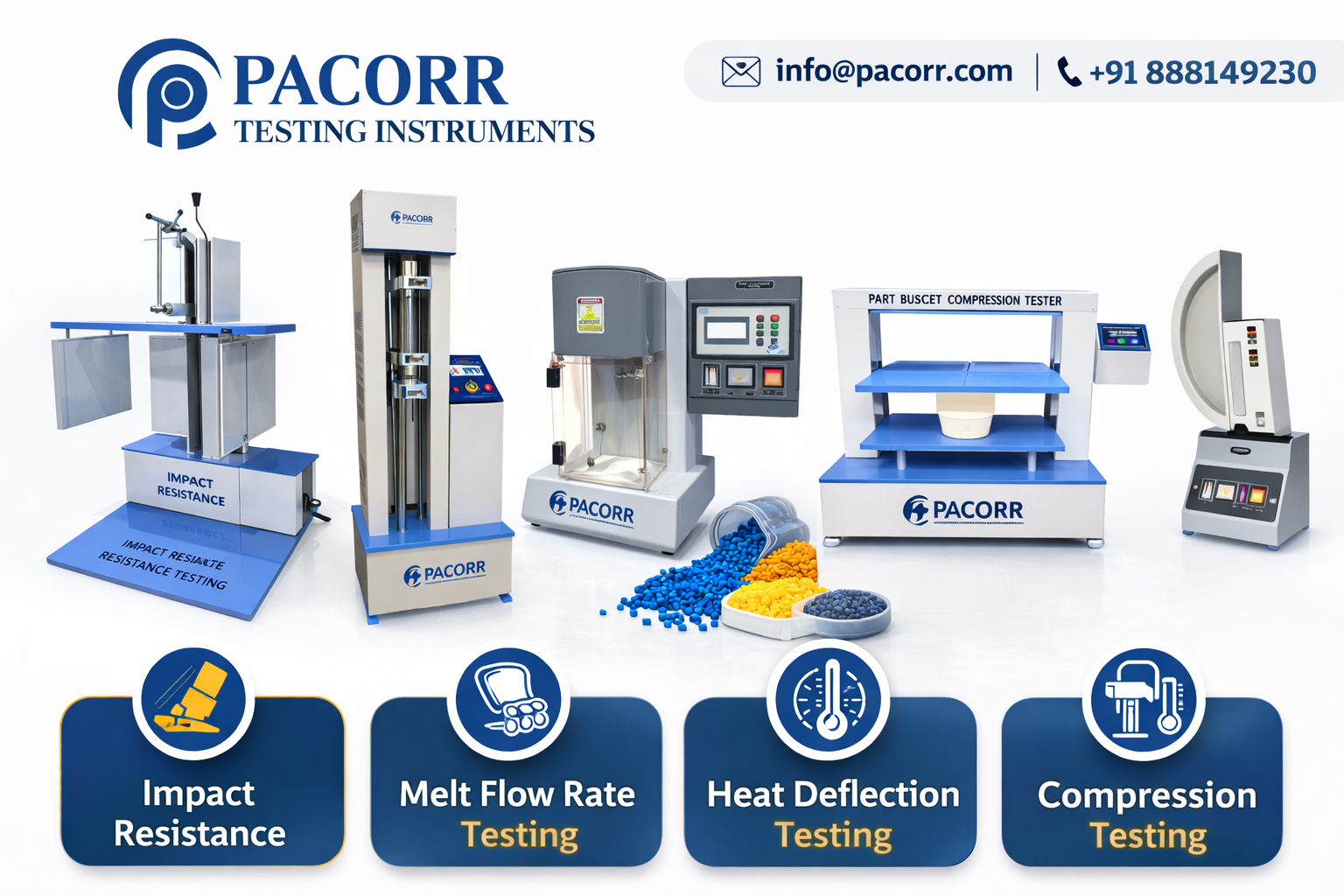
Among the most widely used quality control methods are impact testing, melt flow rate testing, heat deflection testing, and compression testing. These testing techniques allow engineers and manufacturers to evaluate the mechanical and thermal behavior of materials, ensuring that the final products are reliable and safe.
By implementing these testing procedures, companies can improve product quality, reduce manufacturing defects, and meet industry regulations.
Impact Resistance Testing
Impact resistance testing is used to determine how well a material can withstand sudden shocks or forces without cracking or breaking. Many products encounter unexpected impacts during transportation, storage, and daily usage. If the material lacks sufficient toughness, it may fail under these conditions.
This testing method measures the amount of energy a material can absorb before it fractures. The results help manufacturers understand the material’s toughness and resistance to sudden mechanical stress.
Common techniques used for this test include the Izod Impact Test and the Charpy Impact Test, both widely applied in plastic and polymer industries.
Why Impact Testing is Important
Impact testing provides valuable information about material strength and reliability. Some key advantages include:
Identifying weak materials before production
Improving product durability
Ensuring safety in real-world applications
Supporting better material selection
Industries such as automotive manufacturing and packaging depend on impact testing to ensure their products can handle rough handling and environmental conditions.
Melt Flow Rate Testing
Melt Flow Rate (MFR) testing is a key method used in polymer processing to measure the flow characteristics of melted plastic materials. The ability of a polymer to flow under heat and pressure is an important factor in manufacturing processes like injection molding, extrusion, and blow molding.
During this test, molten plastic is p***ed through a standardized die under controlled conditions. The quantity of material that flows out within a set period is measured and recorded.
Importance of Melt Flow Testing
Understanding the melt flow properties of plastic materials helps manufacturers maintain consistency in production and choose the appropriate materials for specific applications.
Benefits of MFR Testing
Maintains uniformity in plastic production batches
Helps detect contamination in polymer materials
Supports efficient processing in manufacturing
Ensures consistent product performance
Manufacturers rely on this testing method to monitor material quality and improve processing efficiency.
Heat Deflection Temperature Testing
Heat Deflection Temperature (HDT) testing determines the temperature at which a material begins to deform under a specified load. Many materials, especially plastics, are used in environments where they are exposed to heat while also carrying mechanical loads.
This test gradually increases temperature while applying pressure to the material sample. The temperature at which the sample bends or deforms is recorded as the heat deflection temperature.
Importance of HDT Testing
HDT testing is particularly useful for applications where materials must maintain their shape and strength at higher temperatures.
Advantages of HDT Testing
Evaluates the thermal resistance of materials
Helps engineers select materials for heat-sensitive environments
Improves product reliability
Supports efficient product design
Industries such as electronics, automotive manufacturing, and appliance production use HDT testing to ensure their components function safely in high-temperature environments.
Compression Testing
Compression testing is used to evaluate how much compressive force a material can withstand before deforming or failing. This test is widely used to ***ess the structural strength of packaging materials, containers, construction materials, and plastic products.
In a compression test, a sample is placed between two plates in a compression testing machine. The plates apply pressure gradually until the material starts to deform or break. The maximum load that the material can withstand is recorded as its compressive strength.
Applications of Compression Testing
Compression testing is commonly used in industries such as:
Packaging manufacturing
Plastic bottle production
Construction material evaluation
Industrial component testing
Benefits of Compression Testing
Ensures packaging strength during stacking and transportation
Evaluates structural stability of materials
Helps improve product design and durability
Prevents damage during storage and shipping
This testing method is essential for industries that require materials capable of handling heavy loads without losing their shape.
Importance of Material Testing in Manufacturing
Material testing is a critical part of modern manufacturing processes. By ****yzing how materials perform under different conditions, manufacturers can identify potential weaknesses and make improvements before products reach the market.
Testing methods such as impact testing, melt flow rate testing, heat deflection testing, and compression testing provide essential information about the mechanical and thermal properties of materials.
The key benefits of material testing include:
Improved product reliability
Better material selection
Reduced manufacturing defects
Compliance with industry standards
Companies that invest in advanced testing solutions can enhance their production quality and build stronger customer trust.
Pacorr – Supporting Reliable Material Testing
Pacorr offers advanced testing instruments designed to help industries maintain accurate quality control processes. These instruments are widely used in Polymer Testing Instruments, and manufacturing sectors to evaluate material performance with precision.
Pacorr’s testing solutions are known for their:
Accurate and reliable results
User-friendly design
High durability and performance
Compliance with international testing standards
With Pacorr’s equipment, manufacturers can improve product quality and ensure that materials perform effectively in demanding applications.
Book a Free Demo
Want to improve your material testing process?
📞 Call: +91-8882149230
📧 Email: info@pacorr.com
🌐 Website: www.pacorr.com
Book a FREE demo today and discover reliable testing solutions from Pacorr.


Comments
Comments and replies not posted yet.
 Cookie Notice
Leave a comment